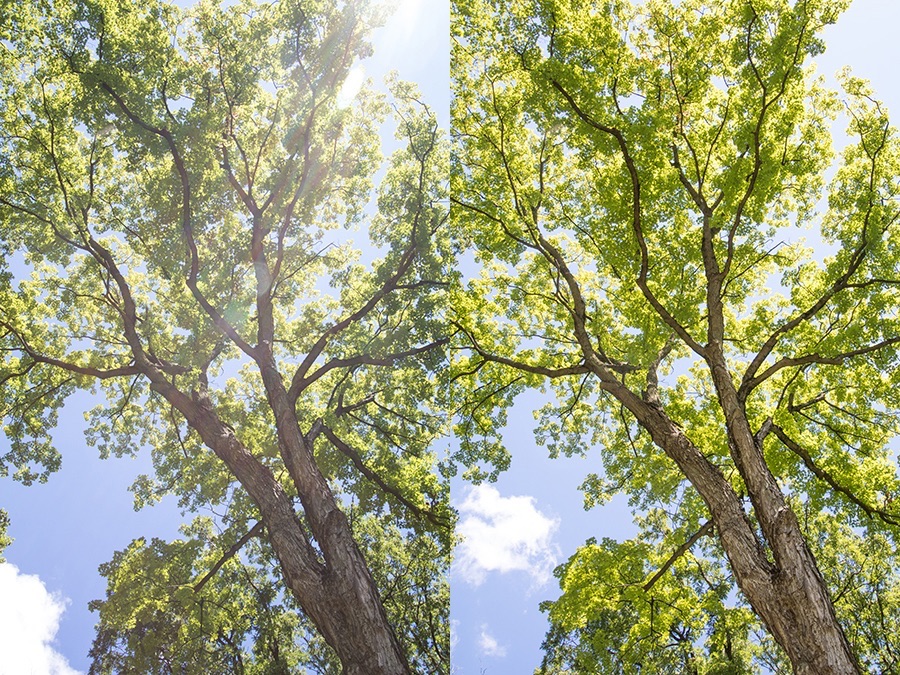
I recently acquired a Canon 10-22mm f/3.5-4.5 Lens to use with my Canon 80D body for tree photography. The lens is considered a wide zoom, but it doesn’t go so far as to give a fish-eye effect. It does capture a very wide angle of view, however— with its widest angle at 107°. As wonderful as this is for capturing the full width of a large area, it can also come with some tricky conditions to deal with. One of those is glare. Since I’m somewhat new to using this lens, I ran into this issue recently while photographing the crowns of large trees and pointing the camera directly upwards.
Here I am pointing my camera directly up towards the crown of the tree you see directly behind me. I wanted to capture as much of the trunk and crown as I could: [Read more…] about A Simple Trick To Eliminate Lens Flare
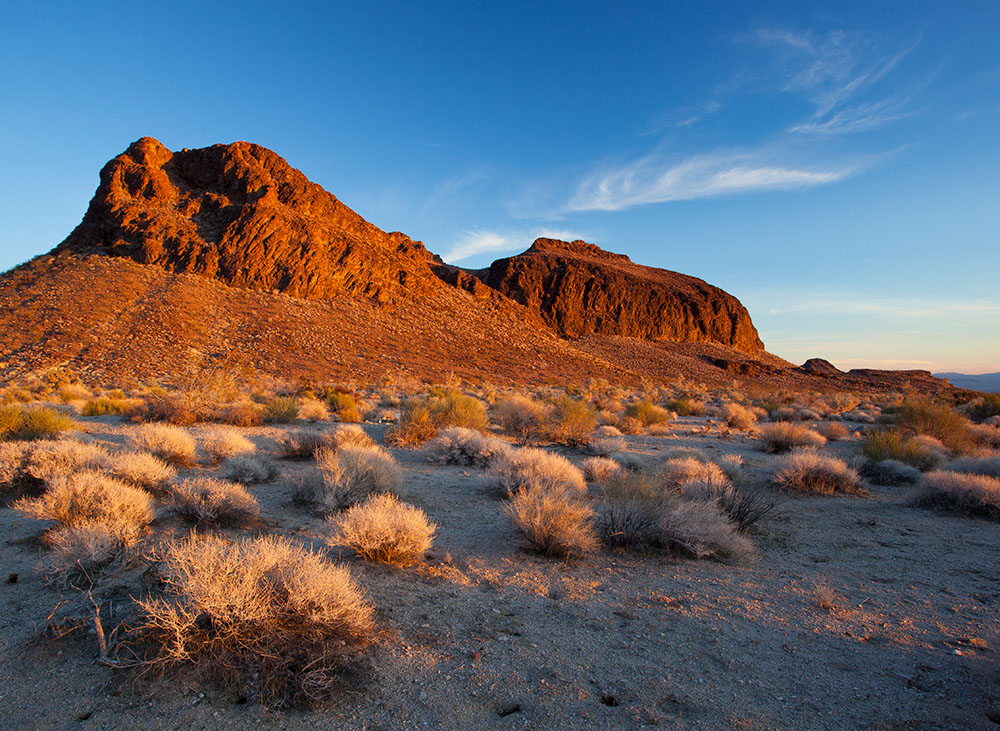 One of the common goals of a landscape photograph is to show depth—either to show the viewer how vast a landscape is or to help lead the viewer’s eye from the foreground into the background.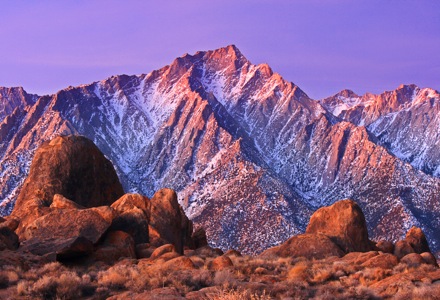
 Sometimes autofocus can be really annoying. For some shots it’ll focus on the right part of your subject, but then the very next shot it may choose to focus on something far and away into the background.
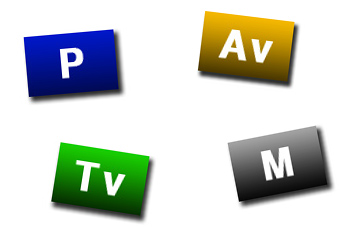 Have you ever been confused by all the different modes on your camera? Maybe you understand what each one does, but you’re not sure which mode is best for what. Well, here’s a summary of the most commonly used modes for nature photography: